
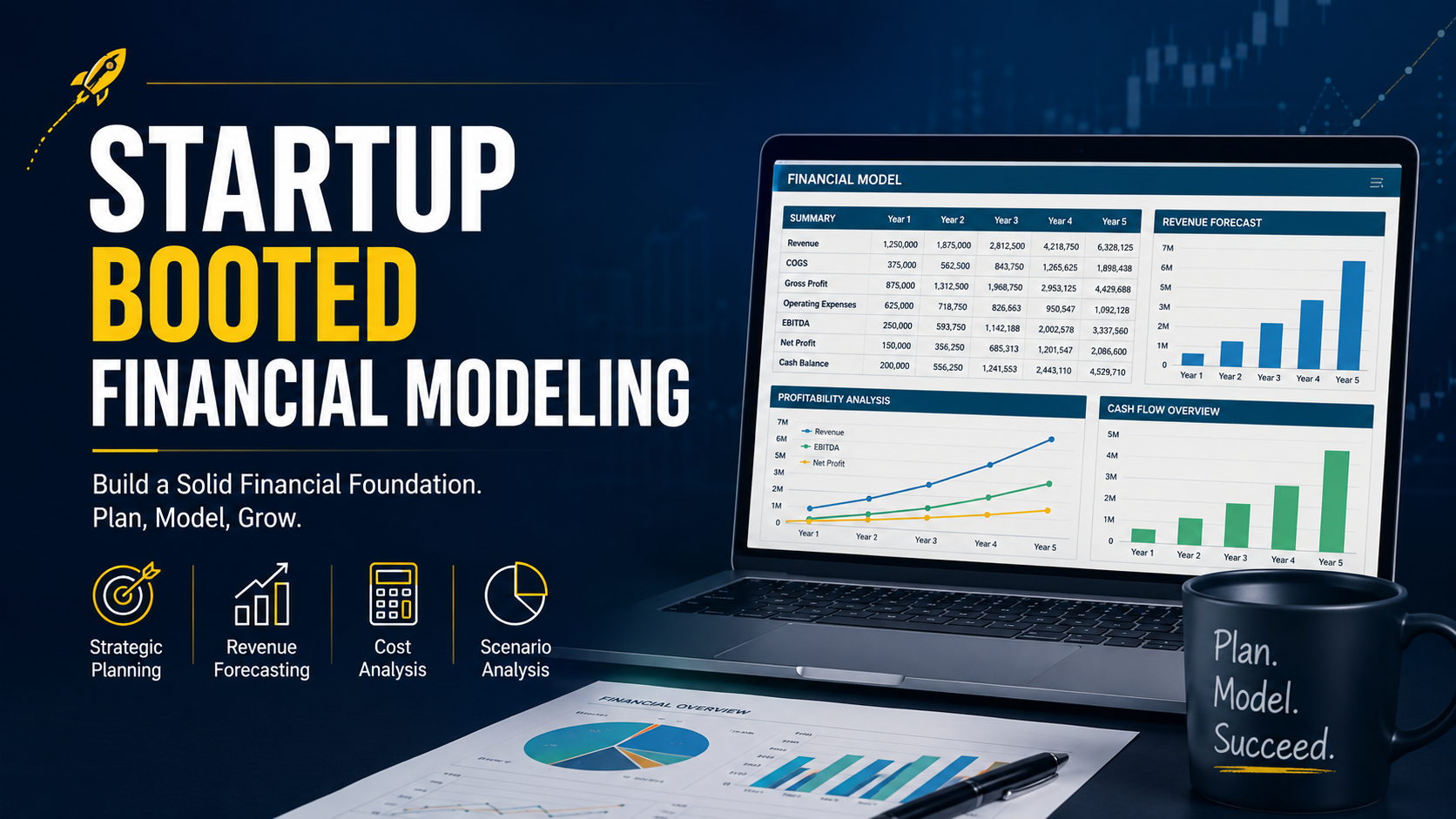
Financial modeling is the backbone of any startup’s strategic planning. For founders and entrepreneurs navigating the complex landscape of raising capital, forecasting growth, and making data-driven decisions, understanding and implementing startup booted financial modeling is critical. Unlike traditional financial planning, this specialized approach focuses on scalable, dynamic projections that are specifically designed for startups at early stages, often operating with limited resources and high uncertainty. In this guide, we will explore the concept in depth, provide actionable insights, and show how founders can leverage financial modeling to secure funding and manage growth effectively.
Understanding Startup Booted Financial Modeling
At its core, startup booted financial modeling is a financial framework tailored for newly launched companies. Unlike corporate financial models built for established enterprises with predictable revenue streams, startup-focused models account for volatility, early-stage market testing, and rapid iterations. These models often include multiple scenarios to anticipate fluctuations in revenue, operating costs, and fundraising requirements. They integrate assumptions regarding product adoption, customer acquisition costs, and runway analysis, providing founders with a clear understanding of how capital deployment impacts growth trajectories. Importantly, this type of modeling is not static—it evolves with the startup’s performance, making it a living document that informs strategic decisions.
A robust startup financial model should clearly articulate key metrics such as monthly recurring revenue (MRR), burn rate, gross margin, and lifetime value of customers (LTV). By doing so, founders can make informed decisions, forecast fundraising needs, and communicate credibility to potential investors. This adaptability is what sets booted financial modeling apart from conventional spreadsheets and static projections.
Why Financial Modeling is Critical for Startups
Financial modeling for startups is more than just a tool for accounting—it is a strategic instrument that can dictate the survival and success of a company. Startups often operate in a high-risk environment where misallocating resources can quickly lead to cash shortfalls. A well-prepared financial model helps in anticipating these challenges by simulating various growth and funding scenarios.
Investors rely heavily on these models to evaluate the feasibility of a startup. A detailed and data-backed startup booted financial model demonstrates that the founders have a clear understanding of their business dynamics, including potential risks and growth opportunities. Moreover, it serves as a roadmap for the team, aligning stakeholders around realistic targets and financial goals. Startups that invest in financial modeling often have higher success rates in fundraising, as they convey confidence and preparedness.
Key Components of a Startup Booted Financial Model
A comprehensive startup financial model consists of several interrelated components that together create a realistic and actionable forecast. The primary elements include:
- Revenue Projections: Forecasting expected sales based on market analysis, customer acquisition strategies, and pricing models.
- Expense Forecasting: Estimating fixed and variable costs, operational overhead, and contingencies.
- Cash Flow Analysis: Mapping cash inflows and outflows to ensure liquidity and sustainable growth.
- Scenario Planning: Creating best-case, worst-case, and base-case scenarios to anticipate market fluctuations.
- Cap Table and Fundraising Requirements: Tracking equity distribution, dilution, and planning for funding rounds.
- Key Performance Indicators (KPIs): Metrics such as customer acquisition cost (CAC), LTV, churn rate, and runway to measure performance against projections.
Integrating these components ensures that the model is not only comprehensive but also flexible enough to accommodate new data and insights as the startup evolves.
Steps to Build a Startup Booted Financial Model
Building an effective startup booted financial model involves a systematic approach, starting from gathering relevant data to constructing detailed projections. The key steps include:
- Define Business Assumptions: Establish the core assumptions around revenue streams, market size, pricing, and customer growth.
- Collect Historical Data: For startups that are already operating, historical performance data provides a foundation for future projections.
- Design Revenue Models: Include subscription models, one-time sales, or freemium-to-paid conversions as applicable.
- Project Expenses: Break down costs by departments, including marketing, development, operations, and legal.
- Perform Cash Flow Analysis: Calculate cash burn and runway, identifying when additional funding will be required.
- Create Scenarios: Test multiple “what-if” scenarios to prepare for uncertainties and investor inquiries.
- Validate and Refine: Regularly update the model with real data to improve accuracy and reliability.
This structured approach ensures that founders have a clear roadmap for financial planning while maintaining flexibility to adapt to unforeseen changes in the market.
Tools and Software for Startup Financial Modeling
Numerous tools and software solutions exist to assist founders in building robust financial models. Spreadsheet programs such as Microsoft Excel and Google Sheets remain popular for their flexibility and ease of customization. However, specialized platforms have emerged to streamline startup financial modeling:
- LivePlan: Offers step-by-step guidance for creating professional financial forecasts.
- Carta: Focused on cap table management and equity planning.
- Jirav: Combines budgeting, forecasting, and reporting with scenario modeling.
- Fathom: Provides in-depth performance metrics and visualizations for investors and founders.
Choosing the right tool depends on the startup’s complexity, stage, and the level of detail required. Many early-stage founders start with spreadsheets and migrate to specialized platforms as their financial needs grow more sophisticated.
Common Mistakes in Startup Financial Modeling
Even experienced entrepreneurs can fall into common traps when building a financial model. Avoiding these mistakes is crucial for creating a reliable and credible model:
- Overly Optimistic Projections: Inflated revenue estimates can mislead investors and create cash flow problems.
- Neglecting Cash Flow Management: Revenue projections are meaningless if the startup runs out of cash to operate.
- Ignoring Scenario Planning: Failure to prepare for different outcomes can lead to strategic missteps.
- Underestimating Expenses: Many startups overlook hidden costs such as legal fees, taxes, and operational overhead.
- Lack of Regular Updates: Financial models must evolve with the business; outdated projections are less valuable.
By addressing these pitfalls, founders can create a model that provides accurate insights and strengthens investor confidence.
How Investors Use Startup Booted Financial Models
Investors scrutinize financial models to evaluate the viability and growth potential of a startup. A clear and detailed startup booted financial model allows them to understand:
- Revenue and profit projections over the next 3–5 years.
- Cash runway and the timing of future funding needs.
- Assumptions regarding customer growth and market penetration.
- Expected returns and exit strategies.
A well-structured model signals professionalism and preparedness, significantly increasing the likelihood of securing investment. Founders who can confidently present and defend their financial assumptions often stand out in competitive funding rounds.
Best Practices for Maintaining Your Financial Model
Maintaining a financial model is an ongoing process that requires discipline and attention to detail. Best practices include:
- Regular Updates: Update the model monthly or quarterly to reflect actual performance.
- Scenario Testing: Continuously test different business assumptions to anticipate changes in the market.
- Clear Documentation: Record assumptions, data sources, and methodologies to ensure transparency.
- Collaborative Input: Involve key team members to validate assumptions and identify potential oversights.
- Investor-Ready Reports: Ensure that the model can easily generate reports for fundraising or board meetings.
By following these practices, founders can keep their startup booted financial modeling accurate, actionable, and a powerful tool for strategic decision-making.
Conclusion
Startup booted financial modeling is an indispensable tool for founders and entrepreneurs who aim to navigate the uncertainties of early-stage business growth. From creating revenue projections to analyzing cash flow and preparing for fundraising, a robust financial model enables startups to make informed decisions and communicate credibility to investors. By understanding its components, avoiding common mistakes, and implementing best practices, founders can maximize the potential of their ventures and increase the likelihood of long-term success.
In an environment where every dollar counts, and every decision impacts survival, startup booted financial modeling is not just an optional exercise—it is a strategic necessity for building a sustainable and scalable business.
About the Author
